top of page

Participatory Heritage
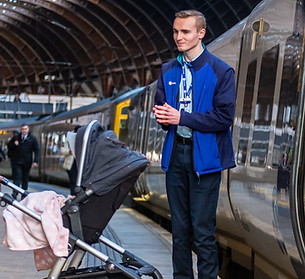
Barriers to Train Travel and Working in the Rail Industry for Diverse Communities in Lancashire


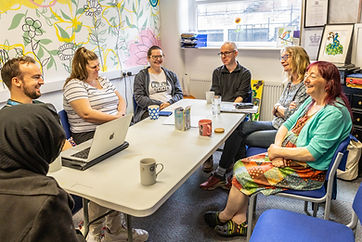


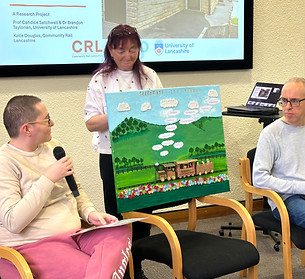
In 2025, Dr Brandon Taylorian worked alongside Professor Candice Satchwell on a major community-based research project examining the barriers experienced by diverse communities in Lancashire when accessing rail travel and considering employment in the rail industry. The project was commissioned by Odis Palmer, Department for Transport Operator and Industry Inclusion and Belonging Lead and Co-Chair of Rail Unites for Inclusion, and was delivered with the support of Community Rail Lancashire.
The research sought to place the experiences of communities whose voices are often underrepresented in transport policy and industry discussions at the centre of the conversation. Over five months, we engaged with 261 participants, including primary school pupils, college students, refugees and asylum seekers, South Asian women, d/Deaf and disabled people, young and mature carers, people experiencing mental health challenges, and young people at risk of homelessness. The central question was straightforward but important: what barriers do people in Lancashire face in accessing rail travel and careers, and how might these be reduced so that everyone can feel included, confident and valued?
Using a mixed-method, community-based approach, the project combined surveys, focus groups and interviews with specialist practitioners. Rather than approaching accessibility solely as a question of physical infrastructure, we explored participants' lived experiences of the entire rail journey and the factors influencing whether people considered travelling by train at all. The research also examined awareness and perceptions of careers within the rail industry.
The findings demonstrated that barriers to rail travel are interconnected. Participants identified challenges relating to affordability and ticketing complexity; confidence and anxiety; disability and accessibility; communication; station and train infrastructure; safety and antisocial behaviour; cultural and social expectations; staff visibility and attitudes; and wider socioeconomic inequalities. Particular points of vulnerability included ticket machines, unclear signage, station lighting, platform gaps, inconsistent Passenger Assistance and limited staff presence. Confidence emerged as especially important: confusing information or a single negative experience could discourage future journeys, while clearer information, accessible wayfinding and supported exposure to rail travel could help build independence.
The research also revealed significant barriers to careers in rail. Many young participants associated the industry primarily with highly visible occupations such as train drivers, conductors and track workers and had little awareness of the much wider range of careers available in areas such as finance, human resources and marketing. Limited exposure to diverse role models and unclear pathways into employment further restricted perceptions of the industry as a potential career.
A central conclusion of the project was that inclusion cannot be achieved through a one-size-fits-all approach. Economic circumstances, disability, gender, ethnicity, culture, caring responsibilities and other factors frequently intersect, while particular communities can also have distinct needs requiring tailored responses. The research therefore emphasised the importance of working with communities as partners in developing more accessible and inclusive transport services.
The project produced an extensive End of Project Report, translating participants' experiences into practical recommendations for the rail industry. These included simplifying ticketing, strengthening confidence-building initiatives such as Try the Train, improving the visibility and accessibility of passenger assistance, maintaining meaningful human support alongside digital services, increasing awareness of the diversity of careers available in rail, and developing more sustained community engagement. The report positioned rail not simply as a mode of transport but as a public good capable of connecting people with employment, education, communities and new experiences.
Ultimately, the project demonstrated the value of listening directly to communities when designing transport services and employment pathways. Conducted at a significant moment of change for Britain's railways, the research argued that representation, belonging, accessibility and awareness should be integral to the future development of the rail system, ensuring that the people who use—or currently feel unable to use—the railway have a meaningful voice in shaping it.
bottom of page